

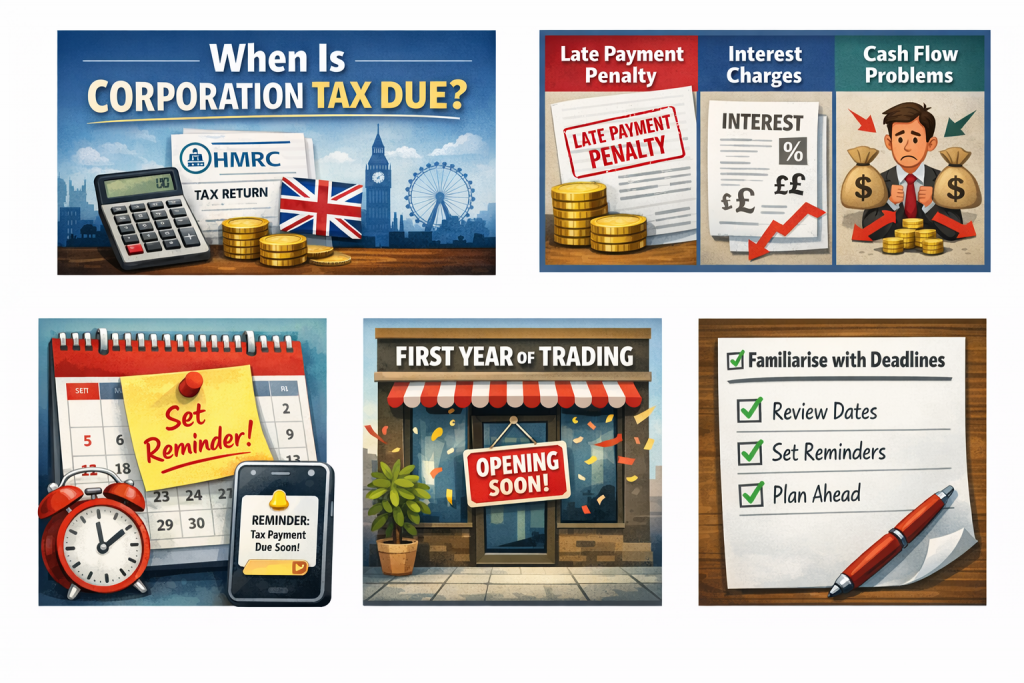
Corporation tax deadlines are one of the most important — and most misunderstood — responsibilities for UK small business owners, startup founders, and company directors. Missing a corporation tax deadline can quickly lead to penalties, interest, and unnecessary cash-flow pressure.
If you’ve ever felt unsure about corporation tax deadlines or confused payment dates with filing dates, this guide will give you clear, practical answers.
📌The Key rule
For most small companies in the UK, your corporation tax bill is due 9 months and 1 day after the end of your accounting period.
This is a payment deadline, not the filing deadline for your Company Tax Return (CT600). Importantly, the tax is usually due before the return is submitted. GOV.UK
👉 For example, if your financial year ends on 31 March 2025, your corporation tax payment deadline will be 1 January 2026.
You should always confirm your specific corporation tax deadlines using HMRC’s official guidance on paying corporation tax.
⚠️ Why Corporation Tax Deadlines Confuse So Many Business Owners
Many of my clients have thought that:
- Filing the Company Tax Return (CT600) and paying the tax happen on the same date
- Or that they don’t need to prepare for payment until much later
In reality, corporation tax deadlines for payment come first, and overlooking this is one of the most common causes of late payment penalties.
💼 A Real Example: What Can Go Wrong
One company I work with underestimated how soon their corporation tax was due after a short accounting period. They focused on getting data ready for their return and assumed payment was due at the same time. As a result, they faced:
- Late payment penalties
- Interest charges from HMRC
- A temporary cash flow crunch
This is avoidable with the right reminders and planning.
✅ Practical Strategies to Stay on Top of Corporation Tax Deadlines
Here’s what I recommend to clients to ensure you never miss a deadline:
- Use Calendar Reminders – Set reminders well before the due date (not just three weeks before!).
- Schedule Ahead with Your Accountant – Book touchpoints early in the year so planning isn’t left to the last moment.
- Build Simple Systems – A spreadsheet or accounting software with alerts can make deadlines impossible to miss.
- Familiarise Yourself With Key Dates – Especially if you’ve just started trading or have short accounting periods.
📅 Special Cases to Watch
- First year of trading — Your first accounting period could be unusual in length, meaning your tax becomes due sooner than you expect. Simply Business UK
- Short accounting periods — HMRC treats these differently, so don’t assume standard timescales apply automatically. Simply Business UK
🔧 Tools & Habits That Help
It sounds simple, but one habit I always encourage is to:
Familiarise yourself with all relevant deadlines at the start of the accounting period.
Pair this with calendar alerts, recurring reminders, and a habit of checking them quarterly — and you’ll be miles ahead.
🎯 Your Next Step: Take Action
In the next 30 days, do this:
➡️ Review your upcoming corporation tax payment date and set at least one reminder in your calendar or business system.
This one action will dramatically reduce your risk of penalties and help smooth your cash flow planning.
· Our Corporation Tax Preparation Service – Support with accurate calculations and compliant filings.
· Small Business Accounting & Bookkeeping – Stay on top of deadlines and financial records.

Leave a Reply